
How to Choose Distributed Energy Systems in 2026?
Choosing distributed energy systems in 2026 will require more than comparing solar panels, batteries, and software platforms. The right decision depends on local demand, grid conditions, weather patterns, financing, and operational skills. A rural clinic may need quiet backup power during outages. A city warehouse may prioritize peak-demand reduction and fast charging. These are different problems. One solution rarely fits both.
This guide examines practical criteria for selecting distributed energy systems with confidence. It considers resilience, total ownership cost, cybersecurity, emissions, maintenance, and future expansion. Reliable decisions should combine manufacturer data, independent testing, installer experience, and site-specific measurements. Ask for documented efficiency under realistic temperatures, not only laboratory results. Check battery degradation assumptions. Review warranty exclusions carefully. Small details matter.
The technology is moving quickly. That creates opportunities and confusion. Some forecasts may be too optimistic. A system that looks economical on paper can struggle when tariffs change or maintenance is delayed. A careful assessment should test several scenarios, including cloudy weeks, equipment failure, and increased electricity demand. It should also examine local interconnection requirements and recognized safety standards.
Start with the building’s actual energy profile. Measure hourly consumption, critical loads, and outage risks. Then compare technologies against those needs. The strongest choice may combine generation, storage, efficiency upgrades, and intelligent controls. It may also be less impressive than the newest product. That is worth remembering.
Good decisions remain transparent, measurable, and adaptable. This approach helps organizations invest responsibly while protecting reliability through 2026 and beyond.
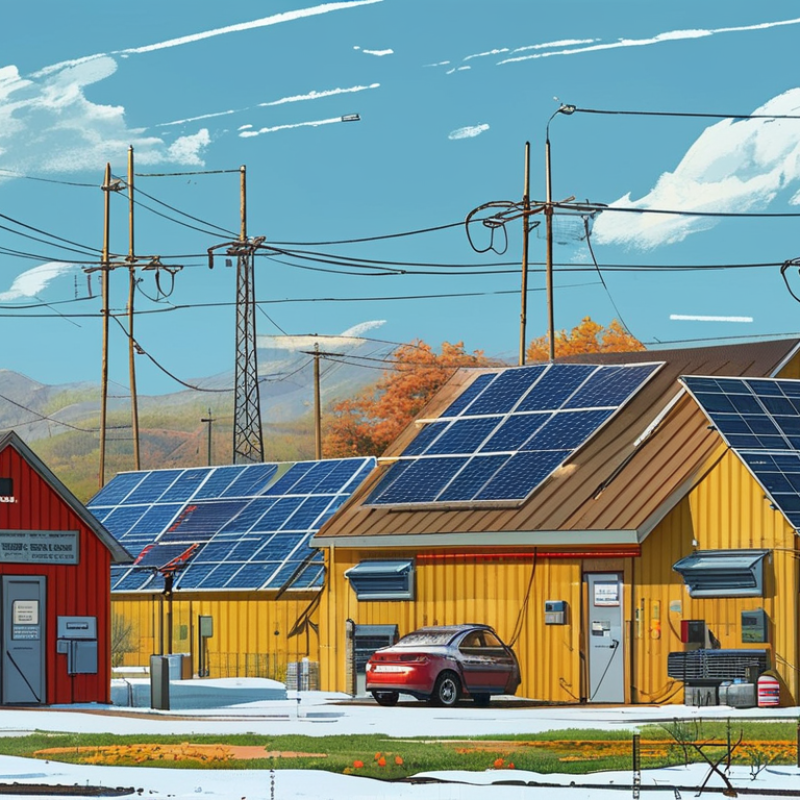
Defining Distributed Energy Systems and Their Core Components
Distributed energy systems produce, store, and manage electricity near the people or facilities using it. Unlike a distant power station, a local system may serve a home, factory, hospital, or community. Its core components usually include solar panels, small wind turbines, fuel-based generators, batteries, inverters, meters, and control software.
Each component has a specific job. Generation creates electricity, while batteries store surplus power for cloudy evenings or short outages. Inverters convert electricity into a usable form and help maintain stable voltage. Sensors and smart meters track production, demand, and battery status. An energy management system then balances these resources, often reducing grid purchases during expensive periods. The grid connection remains important, even when local generation is strong. A system that looks independent may still depend on it during severe weather.
Tips: Start with the load. Review hourly demand, peak equipment, and future expansion plans before selecting technology. Check whether components communicate through open standards. Ask installers about maintenance access, replacement costs, cybersecurity, and emergency operation. Field experience shows that batteries are often sized too aggressively. That can increase costs without improving reliability. Measure twice. Also, do not treat software as an optional feature; poor control settings can waste energy and shorten battery life. Evaluation should include local weather, space limits, electrical safety, permitting requirements, and the operator’s technical skills. Even careful designs need revision after real-world monitoring.
How to Choose Distributed Energy Systems in 2026? - Defining Distributed Energy Systems and Their Core Components
| System Component | Primary Function | Typical Distributed-System Scale | Output or Capacity Characteristic | Response or Operating Profile | Key Selection Criteria |
|---|---|---|---|---|---|
| Solar Photovoltaic Generation | Converts sunlight directly into electricity for on-site use, export, or storage charging. | Approximately 1 kW to 5 MW per installation. | Variable output; annual energy production depends on solar resource, orientation, shading, and system losses. | Ramps with daylight and weather; no direct output at night without storage. | Available roof or ground area, local solar resource, interconnection limits, degradation, and inverter capability. |
| Small Wind Generation | Produces electricity from wind at sites with suitable wind speed and turbulence conditions. | Approximately 1 kW to 100 kW for small distributed installations; larger projects may reach the megawatt range. | Variable output governed by the wind-speed power curve and site conditions. | Can operate day and night when wind conditions are adequate; output may change rapidly. | Measured wind resource, tower height, permitting, noise, setbacks, maintenance access, and local safety requirements. |
| Combined Heat and Power | Generates electricity and captures useful heat from the same fuel input. | Approximately 5 kW to 10 MW, depending on the facility and thermal load. | Dispatchable electrical output; total useful-energy efficiency can exceed electricity-only efficiency when heat is well matched to demand. | Typically operates for scheduled or continuous periods; output can follow electrical or thermal load. | Fuel availability, heat demand, emissions requirements, operating hours, maintenance, and backup arrangements. |
| Battery Energy Storage | Shifts energy over time, reduces peak demand, supports backup power, and helps balance variable generation. | Approximately 5 kW to 100 MW; duration is commonly 1 to 4 hours for many grid-connected applications. | Rated in both power, measured in kW or MW, and energy, measured in kWh or MWh. | Milliseconds to seconds for power-quality and frequency services; discharge duration depends on energy capacity and load. | Usable capacity, round-trip efficiency, cycle life, safety controls, thermal management, warranty terms, and operating temperature. |
| Thermal Energy Storage | Stores heating or cooling energy for later use and reduces electrical peak demand. | From building-scale systems to district-scale installations; capacity is commonly stated in kWh-thermal or ton-hours. | Provides thermal capacity rather than direct electrical generation; duration can range from hours to days. | Usually responds over minutes to hours and is well suited to daily load shifting. | Thermal load profile, storage losses, available space, insulation, charging source, and heating or cooling system compatibility. |
| Demand Response | Adjusts electricity consumption in response to prices, grid conditions, or utility signals. | From individual buildings to aggregated portfolios of flexible loads. | Measured as flexible load reduction or increase, usually in kW or MW, relative to a baseline. | Response may range from seconds for automated controls to hours for scheduled load shifting. | Load flexibility, customer comfort, baseline accuracy, control permissions, event frequency, and incentive structure. |
| Microgrid Controller | Coordinates generation, storage, loads, protection, and the point of connection to the wider grid. | Sized according to the number of assets, critical loads, and electrical network complexity. | Does not create energy; its value is measured through control accuracy, availability, and system coordination. | Automated control can operate in milliseconds to minutes, depending on the function and communications architecture. | Islanded operation, black start requirements, cybersecurity, interoperability, communications reliability, and protection coordination. |
| Electric Vehicle Charging | Supplies electricity to vehicles and can provide controllable or bidirectional demand where supported. | Approximately 1.4 kW to 19.2 kW for common AC charging; higher power is available with DC charging. | Power demand depends on charger rating, vehicle acceptance rate, state of charge, and charging schedule. | Flexible over minutes to hours when charging sessions can be scheduled or modulated. | Electrical service capacity, parking duration, load management, connector compatibility, accessibility, and potential bidirectional operation. |
| Advanced Metering and Sensors | Measures production, consumption, voltage, current, power quality, and operating conditions. | Installed at device, building, feeder, and point-of-interconnection levels. | Provides interval data, commonly at 1-minute to 60-minute intervals, with higher-speed measurements for protection and control. | Monitoring and control latency depends on the meter, communications network, and application. | Accuracy class, data resolution, communications reliability, cybersecurity, privacy, and integration with energy-management software. |
| Grid Interconnection and Protection | Connects distributed resources safely to the electrical network and isolates faults when necessary. | Designed for the facility's voltage level, export limit, fault current, and utility requirements. | Determines allowable import, export, voltage support, and operating modes at the connection point. | Protection functions typically act in cycles to seconds, while interconnection approval can require months of study. | Utility rules, short-circuit contribution, anti-islanding protection, power quality, grounding, and export constraints. |
Note: Capacity and response figures are indicative planning ranges. Actual values vary by technology, site conditions, project design, operating strategy, and local grid requirements.
Related Posts
-
Top 10 Best Home Energy Systems for Sustainable Living?
-
2026 Best Home Energy Systems for Global Buyers?
-

2026 Best Energy Efficiency Solutions for Global Buyers?
-

Top 10 Energy Efficiency Solutions for Global Buyers?
-
Smart Home Energy Solutions for Global Buyers in 2026?
-
How to Enhance Energy Efficiency with Advanced Inverter Technology?